

Roller Crusher Use and Maintenance
Roll crushers are one of the most widely used crushing types. The use and daily maintenance of roll crushers are very complicated tasks. Today, we have summarized the details of all aspects of roll crusher operation, from feeding to maintenance.
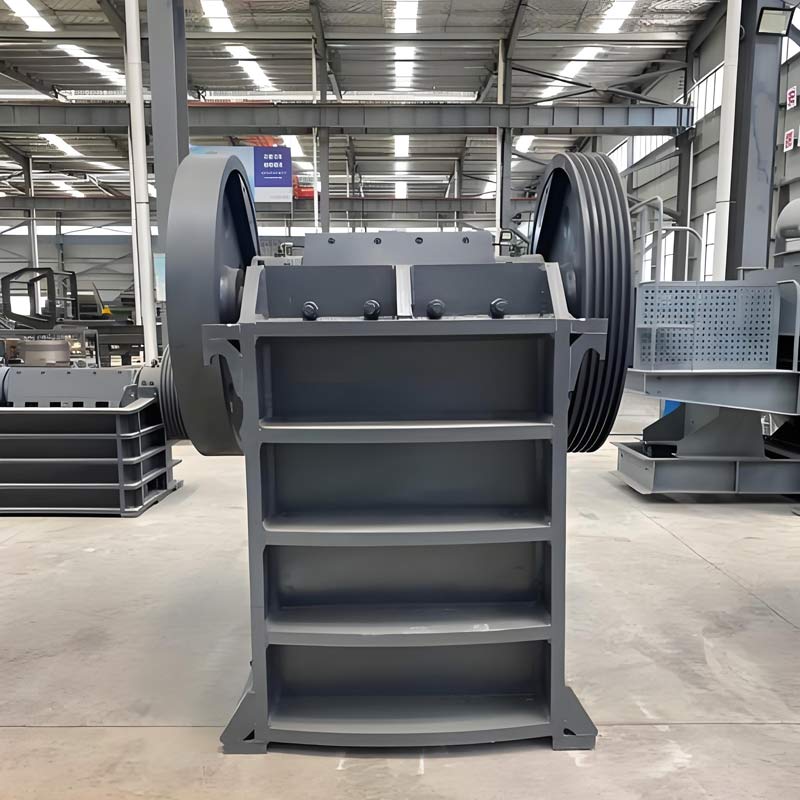
(1) Regardless of the feeding method, a reliable rust removal device must be installed to prevent other debris from entering the crusher.
(2) The roller crusher must be started under no-load. Before starting, a system check of the roller crusher and removal of any remaining material inside the crusher are necessary.
(3) Check the oil levels in the main and auxiliary drive gearboxes to ensure an adequate oil supply.
(4) If the crusher has been out of service for a long time, or is being started for the first time, manually rotate the large pulley 2-3 times to confirm smooth operation. Then, jog the motor a few times. Only after confirming the correct motor rotation direction can the crusher be officially started.
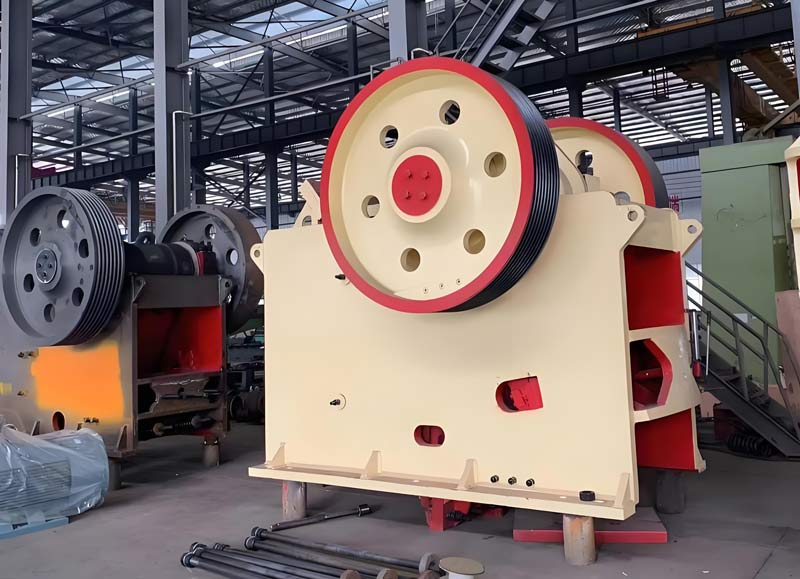
(5) Feeding can only begin after the crusher has reached normal operating speed and there are no abnormalities.
(6) Periodically sample and check whether the particle size of the crushed product meets the requirements. If necessary, readjust the spacing of the crushing rollers.
(7) During normal shutdown, the feeding must be stopped beforehand, and the machine can only be shut down after all material has been discharged from the crusher.
(8) When changing the strength, particle size, or crushing ratio of the material being crushed, the nitrogen pressure in the buffer cylinder should be readjusted. The pressure should be moderate enough to meet the clamping force required by the crushing rollers. Excessive clamping force will accelerate wear of machine parts and increase power consumption. Insufficient clamping force will increase the number of oversized particles in the crushed product and cause frequent vibration of the moving crushing rollers. The operating range of nitrogen pressure in the buffer cylinder is 1.5~4MPa.
(9) The main and auxiliary transmission gearboxes of the crusher are lubricated with gear oil. The lubricating oil in the gearboxes should be changed in time during summer and winter. According to the design requirements, HL30 gear oil (SY1103-77) should be used in summer, and HL20 gear oil should be used in winter.
(10) The bearings of the upper and lower crushing roller translation linkage device of the crusher are lubricated with grease. The design requires the use of No. 2 or No. 3 calcium-based grease. During normal production, the oil cup cap should be tightened once a week to allow for the injection of grease.
(11) During maintenance and repair, if the covers of the main and auxiliary transmission gearboxes need to be opened, the rubber sealing strips must be replaced and a layer of sealant must be evenly applied to the stationary sealing surface before reinstallation to prevent oil seepage and leakage.
(12) After the crusher is overhauled, when reassembling the upper crushing roller and the clamp coupling, the tightening torque of the round nuts and coupling bolts should be strictly controlled. The values are: 600 N·m for the round nuts of the crushing roller; 450 N·m for the high-strength bolts of the clamp coupling. When tightening the bolts of the clamp coupling, attention should also be paid to the order of tightening. The diagonal bolts should be tightened first, followed by the middle bolt. At the same time, the gaps on both sides of the coupling’s split surface should be uniform.
Related Products
Inquiry
Please leave us your requirements, we will contact you soon.