

Achieving circular economy and reuse of sand production lines
With the rise of my country’s construction industry, sand and gravel have become an indispensable part of the industry, making a significant contribution to the country’s economic development. However, with the sharp decline in natural sand and gravel, the demand for artificial sand and gravel has increased dramatically. Driven by the desire to maximize profits, this has led to the widespread use of substandard sand and gravel, resulting in serious consequences.
Sand and gravel are essential aggregates for important construction projects. In my country, their widest applications include industrial use, construction, water conservancy and hydropower projects, railway subgrade ballast, and highway pavement aggregate and subgrade filler. While all these fall under the umbrella of the sand and gravel industry, there is no unified product quality standard applicable to the entire sector. Instead, each industry adheres to its own standards in production and application. This lack of coordination between sectors increases the number of steps involved and easily leads to unnecessary resource waste.
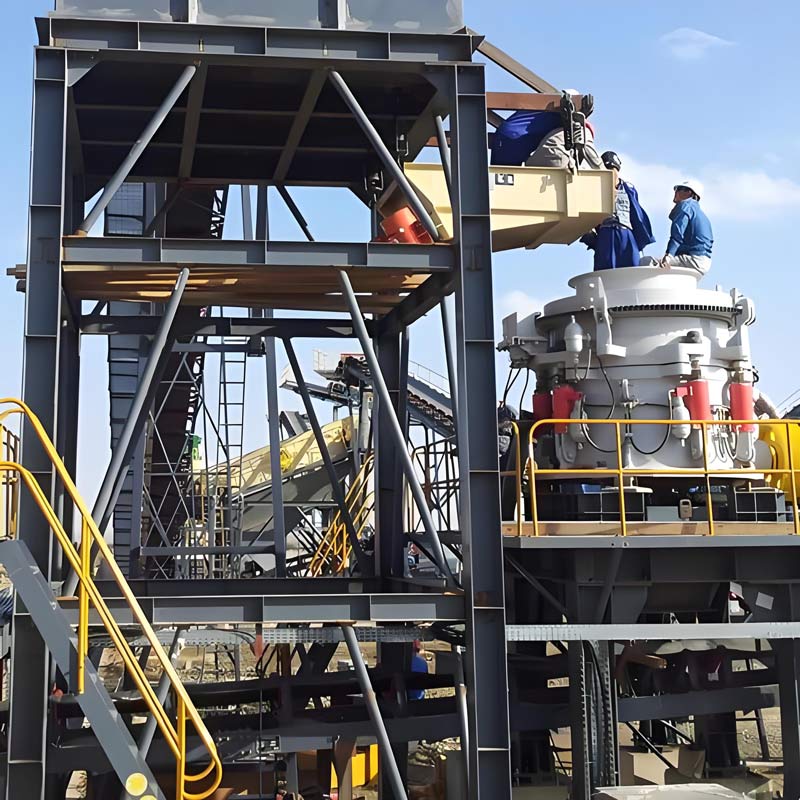
After decades of mining, sand resources in formerly abundant regions of my country have been greatly reduced or are nearing depletion. To strengthen the protection of sand and gravel resources and the environment, my country has stipulated export policies for sand and gravel. Consequently, my country’s sand and gravel industry has undergone comprehensive rectification and entered a legal production track.
Currently, the scale of artificial sand production and manufactured sand production enterprises is also rapidly expanding, leading to higher requirements for sand and gravel production lines, rapid improvement in equipment levels, and a significant increase in production capacity. my country’s sand and gravel industry is gradually developing towards intensification, standardization, and large-scale production, and towards improving the comprehensive utilization of resources. Enterprise concentration has increased, economic benefits have gradually risen, the level of technology and equipment has been continuously improved, a diversified investment pattern has been formed, and enterprise organization and product structure have been continuously optimized.
The development of artificial sand and manufactured sand has many advantages in line with various national policies. For example, it can make up for the insufficient supply of medium and coarse sand from natural sand resources, allow for the artificial adjustment of sand gradation, and control the composition of sand. Sand making machines, stone production lines, and sand production lines can make full use of various waste tailings or waste rocks to replace natural sand and achieve the purpose of comprehensive utilization. Sand production lines have opened up a broad development space for the promotion and application of artificial sand by overcoming the disadvantage of the shortage of sand and gravel resources. It has been applied in concrete aggregates and in the production and construction of large-scale water conservancy projects in my country.
Related Products

Inquiry
Please leave us your requirements, we will contact you soon.