
Ball mills are key equipment for further grinding materials after crushing. There are two grinding methods: dry and wet. They are widely used in industries such as silicate products, refractory materials, cement, glass ceramics, and ferrous and non-ferrous metal beneficiation. Recently, due to the implementation of environmental protection policies, people have added another concern about ball mills: can they remove dust? Below, we will discuss this in conjunction with the price and models of ball mills that are of concern to everyone.
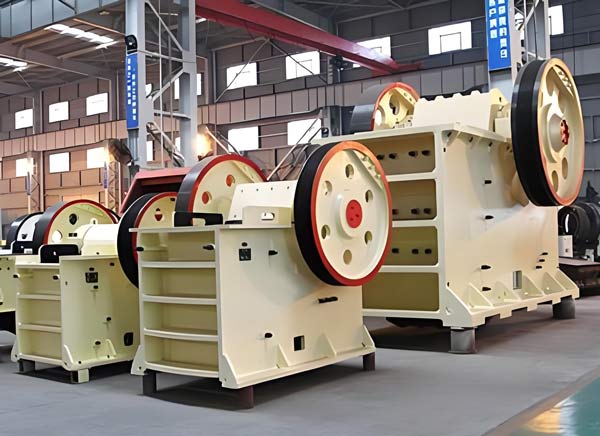
What are the different models of ball mills?
Ball mills are divided into three types, depending on their internal components: those containing steel balls are ball mills, those containing steel rods are rod mills (MBS type rod mills), and those containing ceramics are ceramic ball mills. Below are their specific model parameters.
The outstanding advantages of ball mills include a hollow shaft made of cast steel, replaceable lining, wear-resistant liners inside the casing providing excellent wear resistance, a flexible discharge port design, stable operation, and reliable performance.
The outstanding advantage of rod mills is that during the grinding process, the grinding media and the material are in line contact, resulting in uniform product particle size and fewer excessive mineral particles. Under coarse grinding conditions, rod mills have a larger processing capacity than ball mills of the same specifications.
Can ball mills remove dust?
The answer is definitely yes. Firstly, due to the special structure of the ball mill, the grinding process involves a closed system formed by the ball mill and classifier, with negative pressure conveying and very low dust levels. Secondly, it is equipped with a blast furnace bag filter. Gas enters the chamber through the inlet, and larger dust particles fall naturally into the ash hopper due to gravity. Lighter particles disperse in the gaps between the filter bags in the filter chamber and are trapped on the surface of the filter bags. As the amount of dust particles increases and the filter bag resistance reaches its upper limit, the system automatically opens the back-flushing valve, causing the filter bags to expand from a collapsed state, shaking the dust off the surface of the filter bags into the ash hopper at the bottom of the chamber. The dust in the ash hopper is then discharged through the ash discharge valve. When the filter bag resistance reaches its lower limit, the control system automatically closes the back-flushing valve, stopping the back-flushing cleaning, and the dust collector resumes its purification and filtration operation. This high-yield approach minimizes dust diffusion, achieving environmentally friendly and pollution-free clean production.
Inquiry
Please leave us your requirements, we will contact you soon.