

Optimization and modification scheme for the crushing chamber of a cone crusher
In the optimization and modification of the crushing chamber of a cone crusher, the guiding principle of the design scheme is: simplicity and practicality, maintaining the same installation dimensions for major components, facilitating installation and maintenance, saving investment, and optimizing crushing effect. A stepped crushing chamber is used, increasing the crusher’s nip angle and lengthening the parallel belt without changing the original design crushing ratio or increasing the crusher’s structural dimensions. Details are as follows:
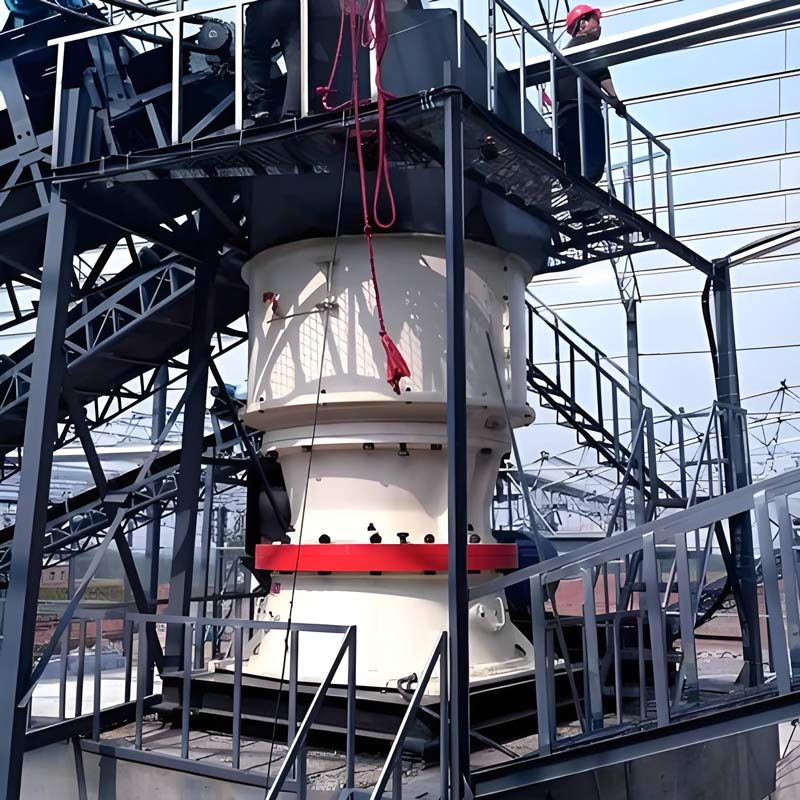
(1) The original crushing chamber is basically linear, and the width of the discharge ore largely determines the particle size and processing capacity of the product. After entering the crushing chamber, the ore is subjected to impact crushing by the movable cone and grinding impacts between ore particles before entering the parallel belt. The ore entering the parallel belt continues to be impact crushed by the movable cone while simultaneously being discharged from the crushing chamber. Due to the relatively short parallel belt, the ore undergoes fewer impact crushing cycles within it, reducing the opportunities for collisions between ore particles. Therefore, the content of fine particles in the discharge is low, and the amount of newly formed fine particles is small. This indicates that some ore is discharged from the crushing chamber without being properly crushed in the parallel belt. The reasons for this are as follows:
① After entering the parallel belt, the ore is subjected to the squeezing impact between the two cone surfaces. There is no constraint in other aspects, only obstruction between materials. Therefore, diffusion inevitably occurs during the lamination crushing process, providing an opportunity for larger ore sizes in the diffusion direction.
② Some ore undergoes only one impact crushing cycle within the parallel belt, failing to meet the product particle size requirements.
③ The ore gains significant kinetic energy before entering the parallel zone, and some ore flies out of the crushing chamber without being crushed by impact within the parallel zone.
④ The ore stays in the crushing chamber for a short time, and the chamber holds a small amount of ore, reducing the opportunities for mutual compression, friction, and collision between the ore particles. This results in some long or flat ores being discharged from the crushing chamber without being crushed.
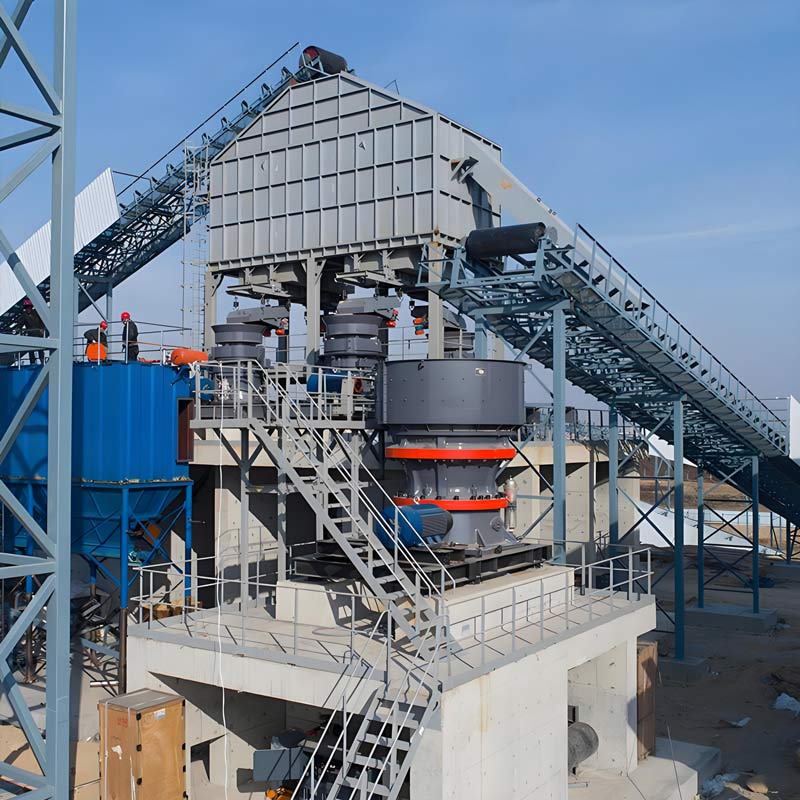
(2) The optimized crushing chamber adopts the principle of layered crushing in the upper crushing chamber, designed as a trapezoidal structure with a small bite angle, which can hold larger ore blocks and crush them. At the same time, it creates opportunities for the ore to stay briefly in the upper crushing chamber, increasing the ore filling rate in the crushing chamber, increasing the impact and shaking friction between the ore, and better utilizing the kinetic energy generated when the ore is crushed, so that the materials collide with each other to form secondary crushing between particles. The material in the upper crushing chamber forms a “wedge-shaped pressure head” on the material in the parallel zone, which can effectively prevent the diffusion of the material in the parallel zone, so that it is crushed better. The lower parallel zone is lengthened, increasing the number of impact crushing times of the ore in the parallel zone, so as to obtain a finer crushed product.
Related Products
Inquiry
Please leave us your requirements, we will contact you soon.