

Maintenance Tips for Spring Cone Crusher
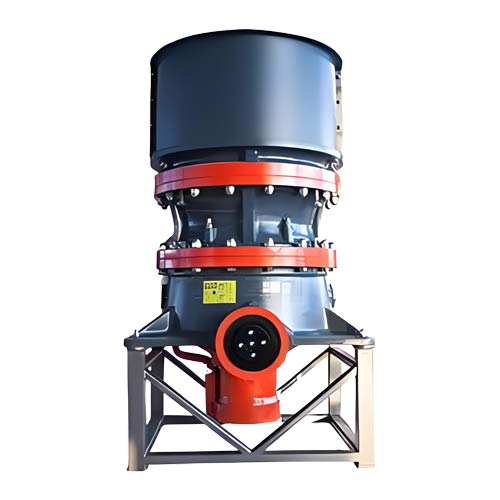
The spring cone crusher (hereinafter referred to as cone crusher) is a new type of crushing equipment. The equipment mainly consists of a frame, a fixed cone assembly, a moving cone assembly, a spring mechanism, a cup-shaped shaft frame, and a transmission part. In addition, there are auxiliary parts, which mainly consist of an electrical system, a thin oil lubrication system, and a hydraulic clearing system. The two main parts together form a complete cone crusher.
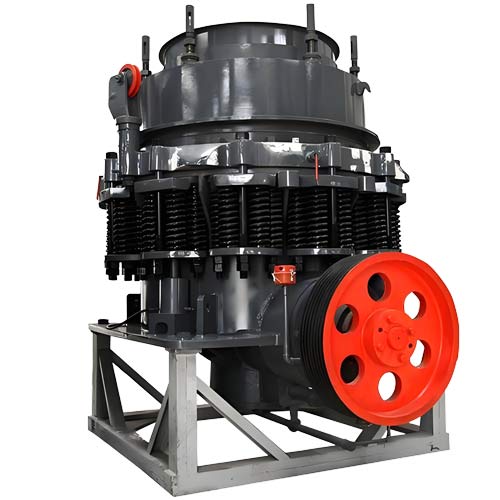
The crushing chamber of a spring cone crusher is the space between two moving parts: the fixed cone liner and the moving cone liner. In other words, the upper part of the crushing chamber is the feeding space, and the lower part is the discharge space. Therefore, “full feeding” in a crusher means that the crushing chamber is filled with material, not that the feeding space at the upper edge of the moving and fixed cone liners is filled with material. Failure to correctly understand full feeding can lead to crusher malfunctions.
The following points should be noted regarding full feeding in a spring cone crusher:
(1) When the crushing chamber is full, the crushing efficiency is high;
(2) To ensure uniform wear of the liners, the crusher should maintain full feeding;
(3) The crusher’s capacity and the economical wear of the liners depend on the appropriate feed rate and the uniform distribution of the feed material around the crushing chamber.
These three points illustrate the importance of full feeding in a spring cone crusher: ensuring both crushing efficiency and uniform wear of the liners.
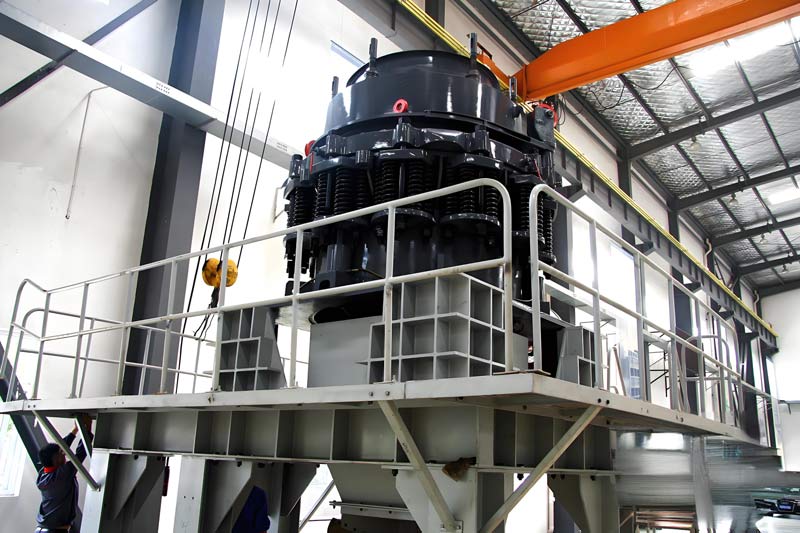
Inevitably, spring cone crushers encounter debris such as tree roots, electrical wires, and iron wires during feeding. This debris accumulates and bulges on the crossbeam, approaching the dust seal and adhering to the sliding ring. During operation, friction between the dust seal and the deposited mineral particles accelerates wear on the dust seal. If not cleaned promptly, these particles enter the machine, contaminating the lubricating oil and clogging the filter element. Furthermore, lubricating oil contamination reduces the service life of bevel gears, copper bushings, and thrust bearings. Additionally, when the ore is damp or has a high moisture content, the fixing bolts securing the dust seal and sliding ring should be checked frequently. If accumulated ore on the crossbeam is not cleaned promptly, the bolts securing the sliding ring rotate with the moving cone, creating relative movement with the accumulated ore and causing wear on the bolt ends. If the slip ring’s fixing condition is not addressed promptly and carefully, a thorough inspection is essential. During operation, if the dust seal and sliding ring detach, a large amount of dust and ore will enter the machine, potentially rendering the spring cone crusher unusable or resulting in significant economic losses.
There are many other routine maintenance tasks for spring cone crushers, such as lubricating the top bearing and horizontal shaft, adjusting the V-belt, checking the thrust bearing, checking the bevel gear clearance, tightening the bolts on all parts of the machine body, and protecting the lubrication and adjustment oil pipes. As long as you carefully check, lubricate, adjust, tighten, replace, clean, and protect according to the requirements, you can ensure the performance of the spring cone crusher.
Related Products
Inquiry
Please leave us your requirements, we will contact you soon.