

Main uses of fly ash and grinding equipment
The main sources of fly ash are thermal power plants and urban district heating boilers that use pulverized coal as fuel. Over 90% of this ash is wet ash, which has lower reactivity than dry ash, consumes more water and electricity, pollutes the environment, and is not conducive to comprehensive utilization. To better protect the environment and promote the comprehensive utilization of fly ash, and considering the maturity of dust removal and dry ash conveying technologies, dry ash collection has become the future trend for fly ash collection.
The Raymond mill is a commonly used grinding equipment for processing fly ash. It can efficiently utilize the inherent properties of fly ash, and during processing, the Raymond mill has excellent sealing properties, resulting in zero dust emissions and reducing dust pollution.
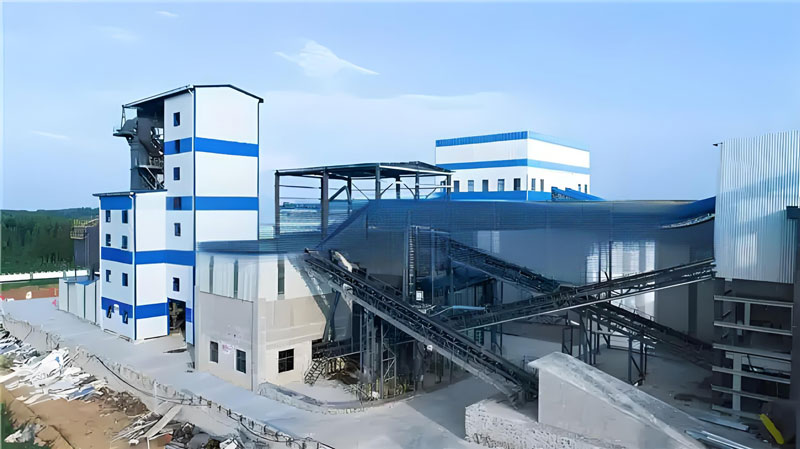
Fly ash is one of the largest industrial wastes discharged in my country. With the development of the power industry, the amount of fly ash emitted by coal-fired power plants has been increasing year by year. Large amounts of untreated fly ash will generate dust and pollute the atmosphere; if discharged into waterways, it will cause river siltation, and the toxic chemicals it contains will harm human health and other organisms. Additionally, fly ash can be used as an admixture in concrete.
Fly ash is mainly used to produce fly ash cement, fly ash bricks, fly ash silicate blocks, fly ash aerated concrete, and other building materials. It can also be used as agricultural fertilizer and soil conditioner, recycled as industrial raw materials, and as an environmental material. Modern concrete technology, which uses high-quality fly ash and high-efficiency water-reducing agents to produce high-grade concrete, is rapidly developing nationwide. High-quality fly ash is particularly suitable for preparing pumped concrete, mass concrete, impermeable structural concrete, sulfate-resistant concrete, soft water erosion-resistant concrete, underground and underwater engineering concrete, grouted concrete, and roller-compacted concrete. Fly ash concrete has advantages such as good workability, strong pumpability, improved finishing, enhanced impact resistance, and increased frost resistance.
Adding fly ash to concrete saves a significant amount of cement and fine aggregate; reduces water consumption; improves the workability of the concrete mix; enhances the pumpability of the concrete; reduces concrete creep; reduces heat of hydration and thermal expansion; improves the concrete’s impermeability; and increases the finishability of the concrete surface.
Related Products
Inquiry
Please leave us your requirements, we will contact you soon.