

How to choose a crushing method for ore?
Nature contains a variety of mineral resources, each with different physical properties and hardness. The degree to which an ore resists external impact is called its ease of crushing, serving as a reference standard for measuring its crushability.
The main factor affecting the ease of ore crushing during production is the ore’s inherent hardness. The crushing method is primarily determined based on the ore’s physical and mechanical properties, the size of the ore feed, and the required crushing ratio. In the mineral processing industry, the crushability coefficient is commonly used to quantitatively measure the impact of mineral mechanical strength on crushing operations. Its expression is as follows:
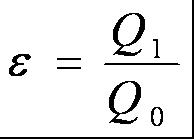
Where ε is the crushability coefficient of the material;
Qo is the crushing capacity of a certain crusher for crushing medium-hard ore;
Q1 is the crushing capacity of the same crusher for crushing a specified ore under the same conditions.
Medium-hard ores are typically represented by quartz, which has a crushability coefficient and a grindability coefficient of 1.
The hardness, crushability coefficient, and grindability coefficient of ores are shown in Table 1-3-2.
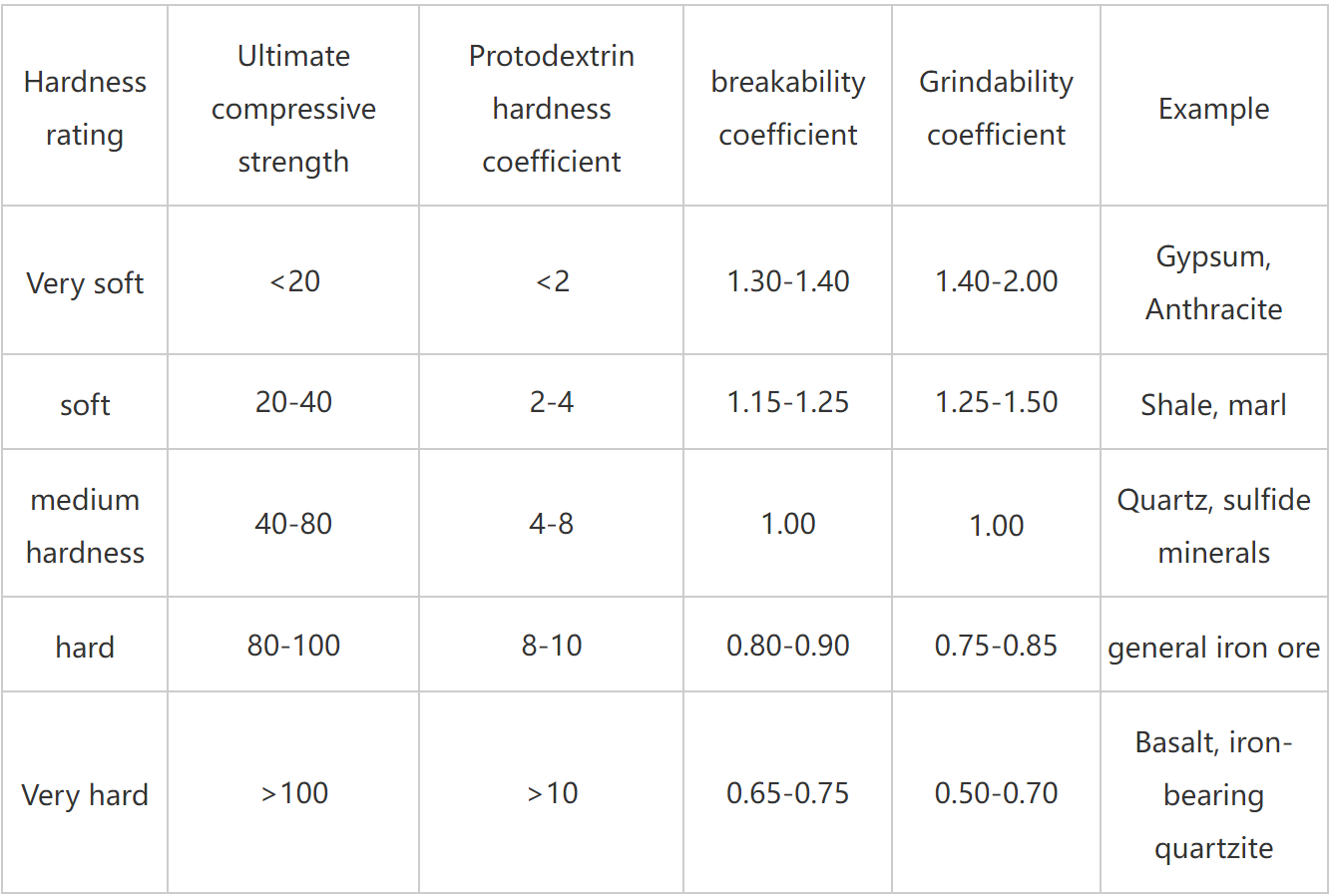
The table shows the ore hardness, crushability coefficient, and grindability coefficient.
The ease of mineral crushing is closely related to the mechanical properties of the mineral. The bonding force between different mineral aggregates is smaller than the bonding force within the same mineral; within the same mineral aggregate, the bonding force on the crystal surface is smaller than that within the crystal.
Generally speaking, the smaller the mineral particle size, the more difficult it is to grind.
The ease of mineral crushing is also related to the brittleness of the mineral:
1) Brittle materials generally refer to materials that have no deformation or very little deformation before fracturing;
2) Plastic materials refer to materials that deform first and then break during crushing. Coal and most ores in nature are brittle materials, with coal being a soft mineral.
Since ore is a symbiosis of various minerals with different properties, the degree of crushing varies among different minerals. For mineral crushing, a suitable crushing method should be selected based on its material characteristics.
Crushing ratio and particle size characteristics of crushed products:
The crushing ratio refers to the ratio of the feed particle size to the product particle size during the crushing process. The energy consumption and processing capacity of crushing are closely related to the crushing ratio. The crushing ratio is determined by the ratio of the feed particle diameter (Dmax) to the product particle diameter (dmax), i.e.
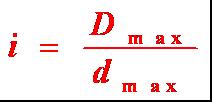

In industrial applications, the crushing ratio determined by equation (1-3-2) cannot accurately describe the crushing process. This is because materials with the same particle size characteristics, after crushing, although the particle size of the product is the same, may not have the same particle size characteristics after crushing, as shown in Figure 1-3-2.
True crushing ratio: The ratio of the average particle size of the material before and after crushing, i = Dp/dp.
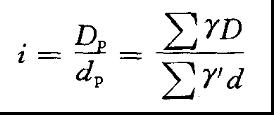
Where: Dp, dp – Weighted average diameter of raw material and product calculated based on particle size characteristics, mm;
γ, – Yield of each particle size fraction of raw material and product (based on sieve analysis), %;
D, d – Arithmetic or geometric mean diameter of each particle size fraction of raw material and product, mm.
The crushing ratio in coal preparation is generally small, and one-stage crushing is sufficient.
However, for mineral processing, the feed particle size is very fine, so the crushing ratio i is very large, often requiring multiple (stage) crushings. The total crushing ratio i is equal to the product of the crushing ratios of each stage.
i = i1×i2×i3×…×in = Dmax/dmax
To evaluate the crushing effect of the crusher and check the quality of the crushed products, it is necessary to determine their product particle size composition and particle size characteristic curves.
Fineness and performance of crushed products
1) Influence of ore particle size: Due to the uneven distribution of mechanical properties in most ore materials, materials with coarse particle size and many gaps have poor mechanical strength and are easily crushed. Fine particle size results in good mechanical strength and makes the material less prone to breakage.
2) Relationship between crushing particle size, crushing efficiency, and energy consumption: The finer the particle size, the greater the material’s resistance to breakage, the more difficult the crushing process, the lower the efficiency, and the greater the energy consumption of the machinery.
3) Selective crushing: Due to the unstable mechanical properties of materials, weaker particles are ground down during fine grinding, while stronger particles remain. This crushing phenomenon is called selective crushing.
4) Agglomeration of fine particles during crushing: When materials are finely ground, the surface area increases dramatically, and the surface energy of the particles also increases. The particles will spontaneously aggregate to reduce the surface energy; this is the so-called agglomeration phenomenon.
5) Brownian motion of fine particles: Colloidal dispersions refer to dispersion systems with dispersed phase sizes between 1 μm and 1 nm, exhibiting significant Brownian motion.
6) As the particle size decreases, the surface chemical forces increase, the slurry viscosity increases, and the slurry’s fluidity and particle dispersibility deteriorate. To counteract the deterioration of fine grinding caused by finer particles, it is necessary to use a dilute slurry concentration or chemical agents to alter the flow and coagulation properties of the slurry system.
Common crushing processes in coal preparation mines: Due to the large particle size of raw coal, the coal preparation methods currently used in my country are mainly heavy media or jigging. To meet the particle size requirements of heavy separation equipment, coal preparation plants have two types of crushing systems.
(1) Open-circuit crushing system: Generally includes pre-screening operations, but the crushed product is not inspected.
(2) Closed-circuit crushing system: Generally includes inspection screening.
Methods for evaluating crushing effect
According to the guiding technical document issued by the former Ministry of Coal Industry in 1980, the evaluation method for the process effect of crushing equipment in coal preparation plants (MT/Z2-1979) should use crushing efficiency as the main indicator and fine particle increment as an auxiliary indicator to comprehensively evaluate the effect of the crusher.
Crushing efficiency is calculated using the following formula:
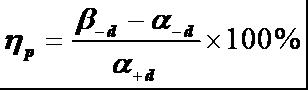
The increase in fine particles is calculated using the following formula:
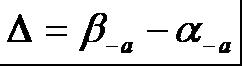
Here, “fine particles” refers to the particle size of the crushed product:
For coarse crushing where the discharge particle size requirement is greater than or equal to 50 mm, “fine particles” refers to 0–13 mm;
For medium and fine crushing where the discharge particle size requirement is less than 50 mm, “fine particles” refers to 0–0.5 mm.
Related Products
Inquiry
Please leave us your requirements, we will contact you soon.