

Analysis of suitable stone materials for sand and gravel production lines
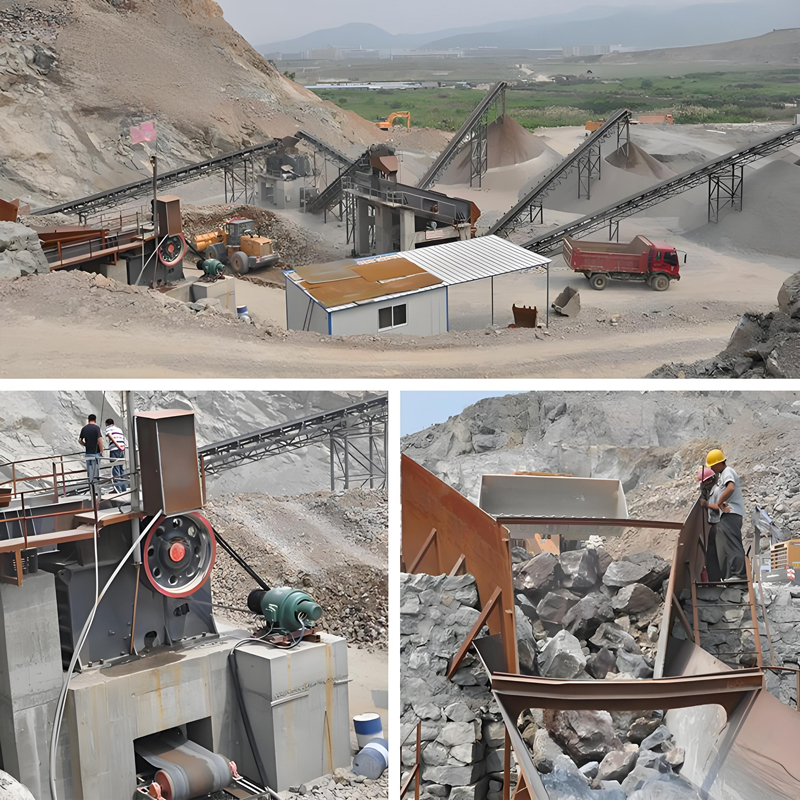
What types of aggregates does the sand making machine primarily handle in a sand and gravel production line? Xinshengrun introduces relevant concepts and knowledge about sand and gravel in a sand and gravel production line. Different rock-forming minerals and diagenetic conditions give various rocks different structures and textures, which greatly influence the physical, chemical, and mechanical properties of natural sand and gravel. In engineering practice, to better utilize sand and gravel materials, it is necessary to understand and master the engineering geological characteristics of rocks.
1. Rock-forming Minerals
The minerals that make up rocks are called rock-forming minerals. Minerals are natural compounds or elements with specific chemical compositions and structural characteristics. Some rocks are composed of one type of mineral, while most rocks are composed of multiple minerals. Major rock-forming minerals include: quartz, feldspar, mica, amphibole, calcite, dolomite, and pyrite.
2. Classification of Natural Sand and Gravel Materials
The properties of sand and gravel materials are determined not only by the mineral composition of the rock but also significantly by the geological conditions under which they were formed. Based on their formation conditions, rocks are classified into three main categories: igneous rocks, sedimentary rocks, and metamorphic rocks, each with significantly different structures and textures. Igneous Rocks: Igneous rocks are formed from molten magma rising from the Earth’s crust and cooling; they are also called igneous formations.
Intrusive Rocks: Intrusive rocks are formed from magma deep within the Earth’s surface, slowly cooling under the pressure of the overlying layers. Intrusive rocks mostly form coarse-grained crystals and massive structures, with a dense texture. Hypnotic rocks are formed near the Earth’s surface; due to faster cooling, they have finer grains. Plutonic and hypabyssal rocks are collectively known as intrusive rocks. Their common characteristics include high density, high compressive strength, low water absorption, and good frost resistance. Commonly used plutonic rocks in engineering include granite, syenite, and gabbro.
Extrusive rocks: Extrusive rocks are formed when magma erupts to the Earth’s surface under conditions of rapid pressure reduction and cooling. Therefore, most of them are uncrystallized and often exhibit cryptocrystalline or glassy structures. When extrusive rocks form thick layers, their structure and texture are similar to plutonic rocks. When they form thin layers, they often exhibit a porous structure, similar to volcanic rocks. Commonly used extrusive rocks in engineering include basalt and andesite.
Related Products

Inquiry
Please leave us your requirements, we will contact you soon.